


I. Introduction
II. Formulation
2.1 Temperature dependent Young’s modulus
2.2 Thermoelasticity problem
2.3 Dynamic problem
2.4 Temperature field
2.5 Optimization problem formulation
2.6 Optimization algorithm
III. Numerical examples
3.1 Rectangular model
3.2 A Vane of heat pump model
IV. Conclusion
I. Introduction
Polymers are most widely used as structural materials for air conditioners to reduce product weight and protect customers from heat and electrical hazards caused by mechanical products. Despite these advantages, polymer parts are also a frequent cause of customer complaints due to deformed appearances or rattling noises. One of the most critical reasons for this difficulty in design is the complex mechanical material properties of polymers compared to metals. For example, Young’s modulus, essential for structural design, is often expressed as a curve or range. Depending on whether the polymer is thermoplastic or thermosetting, the pattern of the characteristic curve changes completely, and the values of mechanical properties can vary rapidly or slowly depending on environmental conditions such as temperature changes, humidity, and ozone exposure near the ocean.
When designing mechanical products using polymers, their mechanical properties are most rapidly affected by internal or external temperature changes. Among the properties of structural materials, the most pressing issue to solve is the temperature dependent Young’s modulus. For instance, when operating a heat pump in winter, the temperature of some structures may fluctuate by more than 100 °C within a few minutes. This can cause visible deformation of the product. Additionally, noise may arise from changes in resonance frequency or rattling between parts with differing thermal expansion coefficients.[1,2]
When this problem was first identified, improved polymer materials is applied to reduce thermal deformation. Carbon fiber was added and engineering plastics were also considered. However, these solutions were not adopted for manufacturing because of little improvement in thermal deformation compared to cost increases. Recently, the technology of inserting air bubbles has been widely applied. While this approach prevents cost increases, it is difficult to use for exterior materials because the air bubble mark is visible on the surface.
Next, efforts were made to modify the structural design using finite element method. The first step involved measuring the complex properties of polymers, followed by applying thermoelastic analysis using temperature field measurement results. When the polymer property graph could not be directly applied to the analysis model, a segmented model was used to specify properties for each temperature range. Vibration analysis was also performed in the same manner. Afterward, trial and error iterations were repeated to derive improved results.
Nowadays, topology optimization has been introduced and has become a highly effective method for reducing trial- and-error processes in the air-conditioner industry. Topology optimization methods for thermoelastic and frequency response problems are widely used to solve such structural design challenges.
The first method, topology optimization for thermoelastic problems, has a long history. Rodrigues et al. introduced a material based model for topology optimization of thermoelastic structures.[3] They performed compliance minimization with a volume constraint while considering both thermal and mechanical loads. Li et al. introduced thermoelastic topology optimization using Evolutionary Structural Optimization (ESO), accounting for nonuniform temperature distribution, multiple thermal loads, and transient heat conduction fields.[4] Xia et al. studied the application of the level set method to thermoelastic problems to reduce gray-scale elements in the solution.[5] Gao et al. introduced thermal stress coefficients and ramped models to provide more stable iterations.[6] Chung et al. studied nonlinear thermoelasticity using the level set method.[7] More recently, Chen et al.[8] and Zheng et al.[9] studied thermoelastic problems considering temperature dependent material properties in 2022 and 2023, respectively.
The second method involves research on minimizing dynamic compliance, introduced by Ma et al.[10] The study on transient problems was demonstrated by Min et al.[11] Later, Olhoff et al.[12] identified mechanisms for minimizing dynamic compliance by increasing or decreasing natural frequencies. However, because a large number of gray scale elements are generated during optimization when decreasing natural frequencies, studies using the level set method were introduced by Shu et al.[13] to reduce them. Additionally, Silva et al.[14] addressed problems where the exit region and fixed boundary are not connected. It’s hard to find a paper on the minimization of dynamic compliance by temperature dependent mechanical material properties. The measurement and simulation of Young’s modulus according to polymer temperature are well documented in polymer chemistry textbooks and papers.[15,16,17] Recently, it has become possible to predict Young’s modulus based on the combination of bonding forces in polymer chemistry.[17] Therefore, if topology optimization technology using temperature dependent Young’s modulus is available, it becomes possible to perform topology optimization of structures using new polymer materials.
In this paper, research is conducted utilizing the temperature dependent Young’s modulus of thermoplastic materials among these polymers. However, the damping coefficient is also temperature dependent due to its viscoelastic characteristic, but it is ignored. Because the behavior near the resonance point is not the focus, and the contents become too complicated. Therefore, the clear limitations of this study should be considered. A Young’s modulus is expressed as a function of temperature and is applied to topology optimization for thermoelastic problems, dynamic compliance minimization, and multi-objective optimization that combines both. The temperature distribution is calculated using the steady state thermal conduction function, and since nonlinear effects are minimal in both thermal conduction and thermoelastic problems, they are computed serially using linear equations. Optimization results are derived using the density method, reaction diffusion equation, and adaptive meshing techniques to reduce gray scale elements. In addition, when multi objective topology optimization is applied, it is analyzed whether a solution is derived from the loading point to the boundary at the excitation frequency where many gray scaled elements are derived. The focus of this paper is the trend of shape change and compliance change of the solution, and detailed stress concentration that can be applied directly to actual mass production is not considered.
II. Formulation
2.1 Temperature dependent Young’s modulus
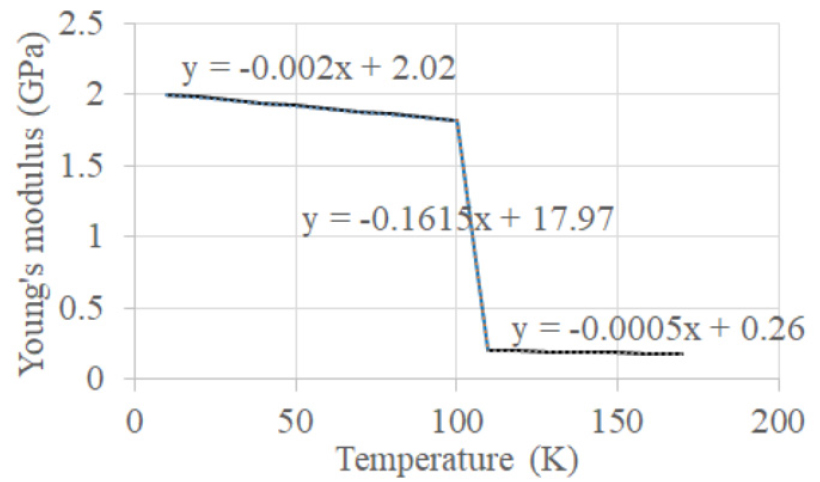
The Young’s modulus pattern according to the temperature of the amorphous thermoplastic polymer is shown in Fig. 1[15,16,17]. In case of the slope in Fig. 1(a), the polymer structure is not changed and the Young’s modulus is reduced by temperature, and the slope can be relatively gentle and steep cases depending on the material. Fig. 1(b) is a type that maintains a similar Young’s modulus when the temperature is lower than the glassy temperature, but drops sharply when the temperature is higher than the glassy temperature. While most designs are performed in the left box area shown in Fig. 1(a), structural designs are also performed in the area of the right box to ensure safety. In this paper, the complex Young’s modulus curve in Fig. 1 is simplified for each section as shown in Fig. 2 and formulated as a linear function.
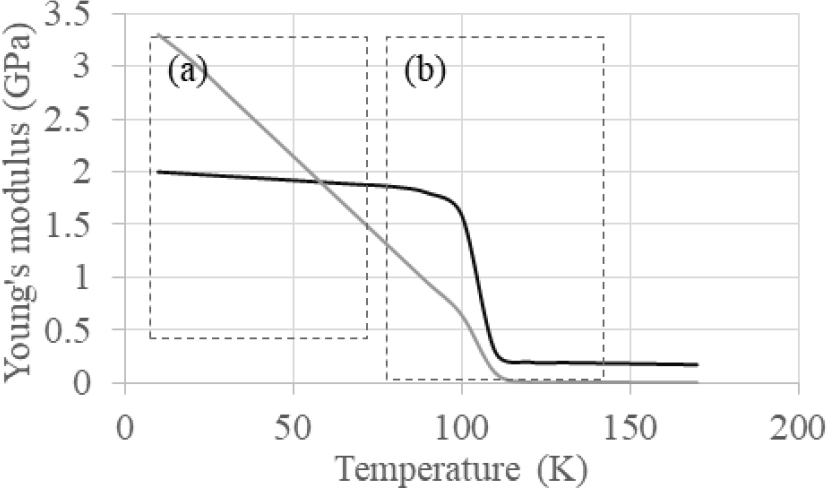
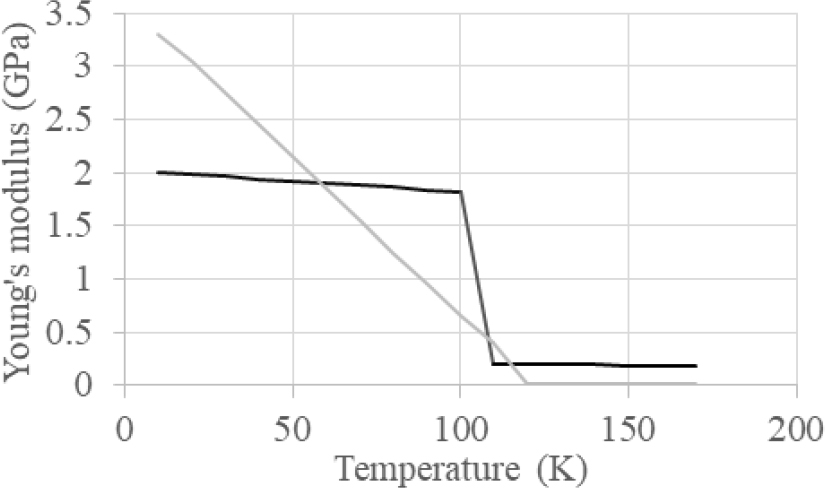
Using the linear expression of the three sections is the closest to the original curve even compared to the sixth- order polynomial, exponential, and logarithmic functions, so the linear expression of the three sections is used. Young’s modulus (E) by temperature (t) are defined as follow:
where , and are young’s modulus on initial temperature and two linearized coefficients.
2.2 Thermoelasticity problem
Variational formulation for thermoelasticity problem is defined in analysis domain (𝛺) as follows[3,4,5,6,7,8,9]:
where u, v and f are displacement vector, test function, and force vector. Deformation tenser , elasticity tensor , thermal strain and Lame´ coefficients are defined as follows
Here,
where T and α are temperature and isotropic heat transfer coefficient. The Young’s modulus E(t) are defined in terms of element density () as follow:
where is the minimum Young’s modulus which is defined in void region to prevent a singularity problem. p is a penalization factor of which the value is set to 3 in this study.
2.3 Dynamic problem
The variational formulation of the harmonic vibration problem is expressed in the analysis domain (𝛺) as follows[10,11,12,13,14]:
where ρ is density, µ and λ are Lame´ coefficients of homogeneous isotropic material. It’s noted that damping terms are not considered in the governing equation. u, v, and f are displacement vector, test function, and force vector, respectively. Deformation tenser (e) is defined as follows:
2.4 Temperature field
Weak form of temperature field[18] assuming steady state can be expressed using Laplacian function as follows:
where Q is a internal heat and no internal heat source is used in this paper.
The thermal stress and temperature fields are weakly coupled. However, they are not dominant compared to other factors, so they are considered independently in the process of calculating the sensitivity.
2.5 Optimization problem formulation
2.5.1 Thermoelastic problem
The optimization problem formulation to minimize compliance of thermoelastic problem is well known as follows[3,4,5,6,7,8,9]:
where () is upper limit of volume fraction. The Lagrangian (F) of objective function is expressed as follows:
The sensitivity also well known as follows:
2.5.2 Dynamic problem
In order to reduce the frequency response of a structure, dynamic compliance () is defined as the objective function to be minimized. This is expressed as follows[10]:
To solve the above constrained optimization problem, unconstrained problem using Lagrangian for dynamic problem is defined as follows:
where γ is Lagrange multiplier for satisfying volume fraction constraint.
The sensitivity for dynamic problem is expressed as follows:
2.5.3 Multi objective problem
The multi objective function composed of thermoelastic and dynamic compliance as follows:
where η is a weighting factor.
2.5.4 Augmented Lagrangian for inequality constrained problem
Augmented Lagrangian method is used to convert from constraint to unconstrained optimization problem. From Eq. (12), volume constraint can be expressed as follows[19]:
Augmented Lagrangian and Lagrangian multiplier are defined as follows:
where
where a positive scalar q and r are the Lagrange multiplier for the inequality constraint and the penalty factor. η is a normalization factor.
2.5.5 Reaction Diffusion Equation (RDE)
There are two update scheme to reduce calculation time and gray-scale elements in this paper. First, Reaction Diffusion Equation (RDE) using fictitious time (t) is applied for first stage. RDE in design domain (𝛺) and the boundary (∂𝛺) is defined as follows[20,21]:
where κ is a diffusion coefficient.
Second, RDE integrated with Double-Well Potential (DWP) is used to reduce gray-scale element in second stage. RDE with DWP is defined as follows:
where , a are smooth Dirac delta function and control parameter for the thickness of gray-scaled zone.
2.6 Optimization algorithm
The optimization algorithm consists of two steps, as shown in Fig. 3. The first step is a quick computational step using smaller elements and RDE update schemes. The second step is a gray scale reduction step using adaptive mesh and DWP update schemes. The reasons to use a two step algorithm is to obtain lower gray scale elements and calculation time. In the case of this paper’s problem, the result of updating about 3,000 Time (s) using RDE alone and the result of mixing RDE 300 s + Adaptive mesh 50 s are similar, but it is not a major issue, so it is omitted.
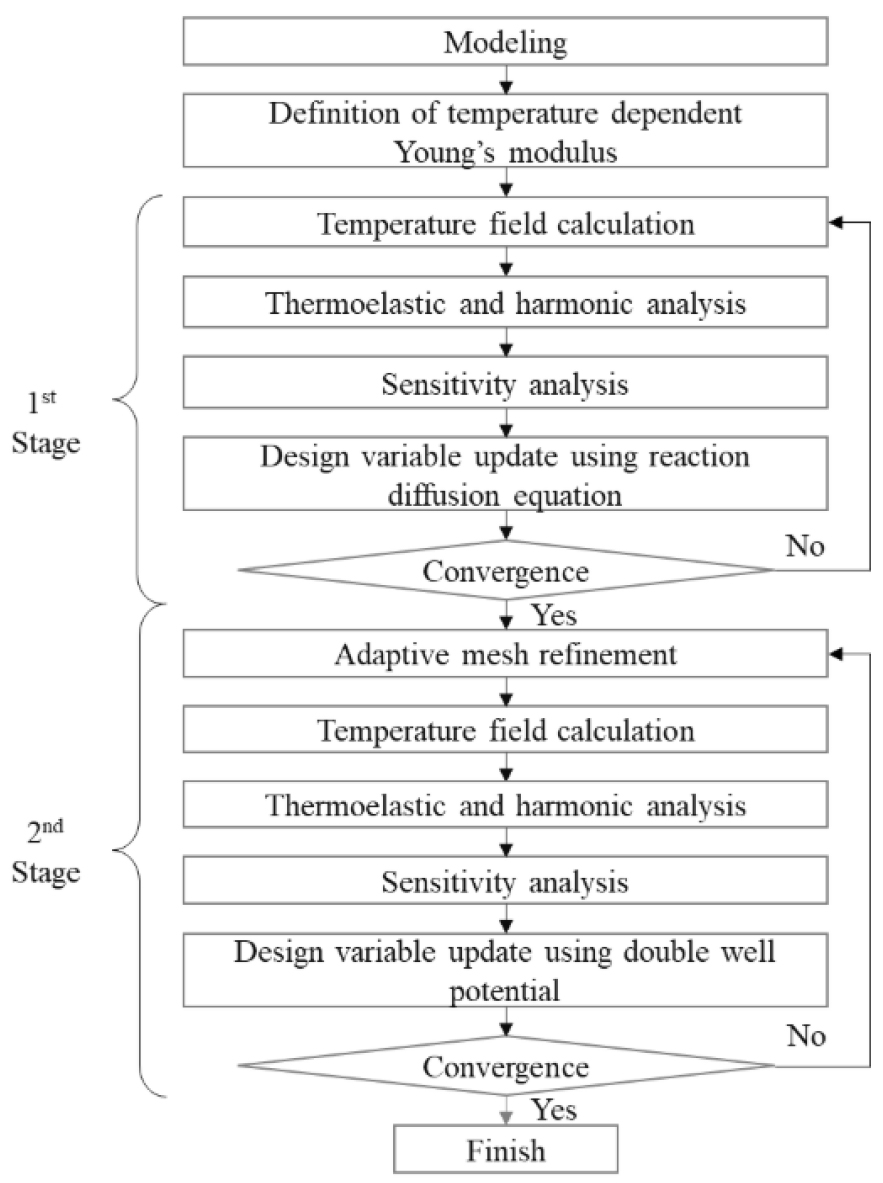
If only RDE is used for the update scheme, a large amount of gray scale elements are generated in the diffusion term of the RDE and more iterations are required to reduce the gray scale elements and to achieve clear boundary. When using only adaptive mesh refinement for updates, more elements are used, which takes more time to calculate. Therefore, a two step computation procedure can lead to results with fewer gray scale elements and less computation time. In this paper, the adaptive mesh refinement algorithm of FreeFEM++ is used for calculations.
III. Numerical examples
3.1 Rectangular model
3.1.1 Thermoelastic problem
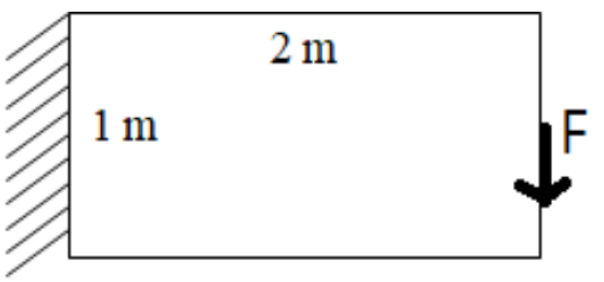
A Rectangular model is used for an example as Fig. 4. Young’s modulus (E0), Poisson ratio (ν), and heat expansion ratio (α) are 199.5 (MPa), 15.4 × 10⁻⁶ (/K) and 0.3 as a sample problem. The loaded force (F), target volume fraction and thermal conductivity coefficient are 10,000 (N), 0.2 and 0.13 (W/mK). The optimized results with uniform temperature distribution are shown in Fig. 5. Compliance with each initial condition is shown in Table 1. All trends of these results in Fig. 5 and Table 1 are same as the result in References [10, 11, 12, 13, 14]. The same volume fraction is used, but it is found that a solution with less volume is derived with increasing temperature. This means that the solution is derived in the direction of decreasing density because the direction of the sensitivity function of the thermo-elastic term is opposite to that of the elastic term. In addition, as shown in Table 1, compliance without thermal loading is 37.38 J, which means that thermal load is the dominant factor compared to static load.
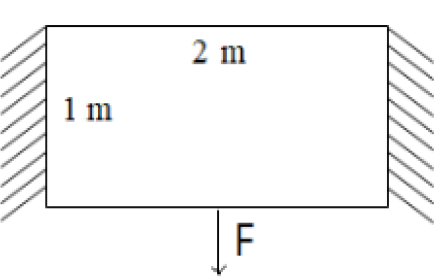
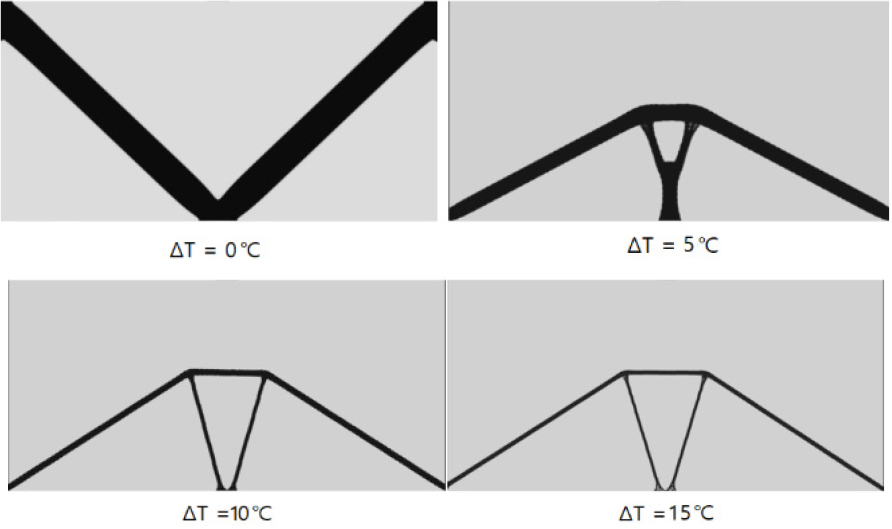
Table 1.
Compliance and in uniform temperature.
| ∆T | 0 °C | 5 °C | 10 °C | 15 °C |
| Compliance initial | 37.38 | 636.45 | 1919.34 | 4452.54 |
| Compliance after | 0.22 | 1.53 | 3.68 | 5.50 |
| Volume fraction | 0.19 | 0.10 | 0.05 | 0.03 |
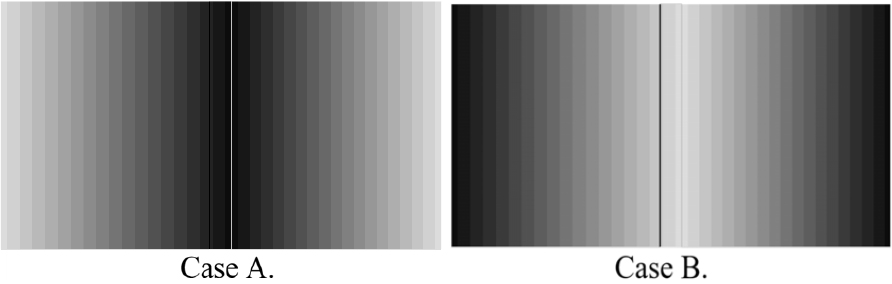
The optimized results with two non-uniform temperature distribution cases are introduced in Fig. 6 but the Young’s modulus are not changed to compare. The maximum temperature change of the models is 15 °C and the minimum is 0 °C. From the results in Fig. 6, it is found that the overall shape is similar, but the distribution of the material is different. In order to maintain the stiffness in the same volume, the volume of the low temperature part where Young’s modulus is high increases, and in order to reduce the stress caused by thermal expansion, a solution in which the material is reduced in the high temperature part is derived. The effect of temperature distribution on compliance is shown in Tables 1 and 2 when the E0 ratio is the same in case 1 and when the E0 ratio is homogeneously increased by 15℃ degrees. Since the overall heat load of case 1 is less than that of the uniform load, compliance is about 5 % small.
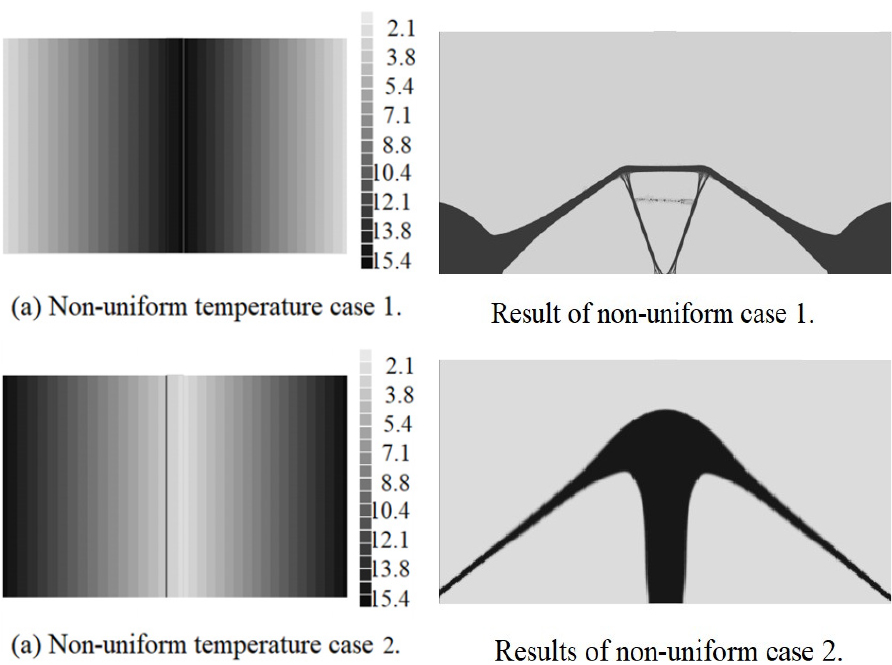
Table 2.
Compliance and in temperature case 1.
| E0 ratio | 0 | 0.5 | 0.1 | 0.01 |
| Compliance | 5.21 | 5.21 | 26.93 | 108.87 |
| Volume fraction | 0.11 | 0.12 | 0.18 | 0.18 |
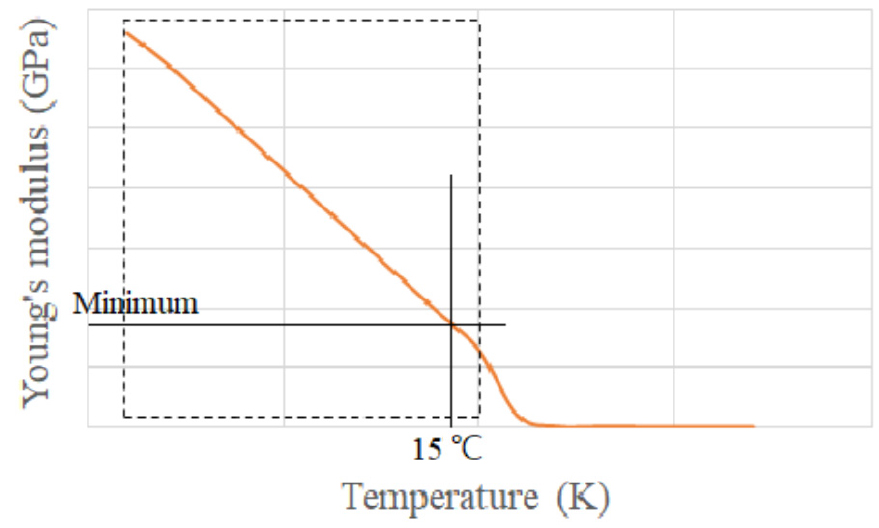
To see the effect of temperature dependent Young’s modulus, a linear model is applied for cases 1 and 2 like Fig. 7. The example cases of temperature dependent Young’s modulus are 50 %, 90 % and 99 % reduction like Fig. 8 and 9. for cases 1 and 2 in Fig. 6.
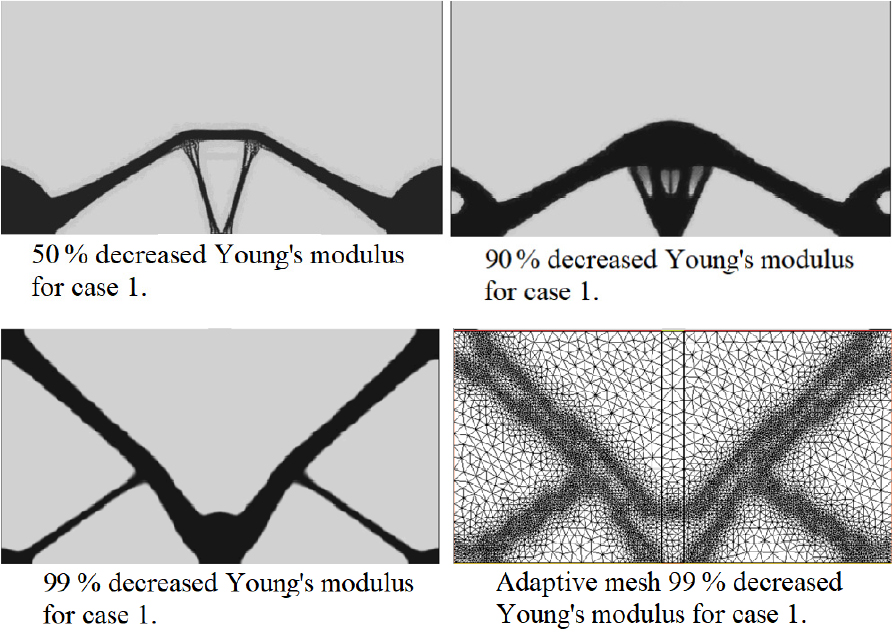
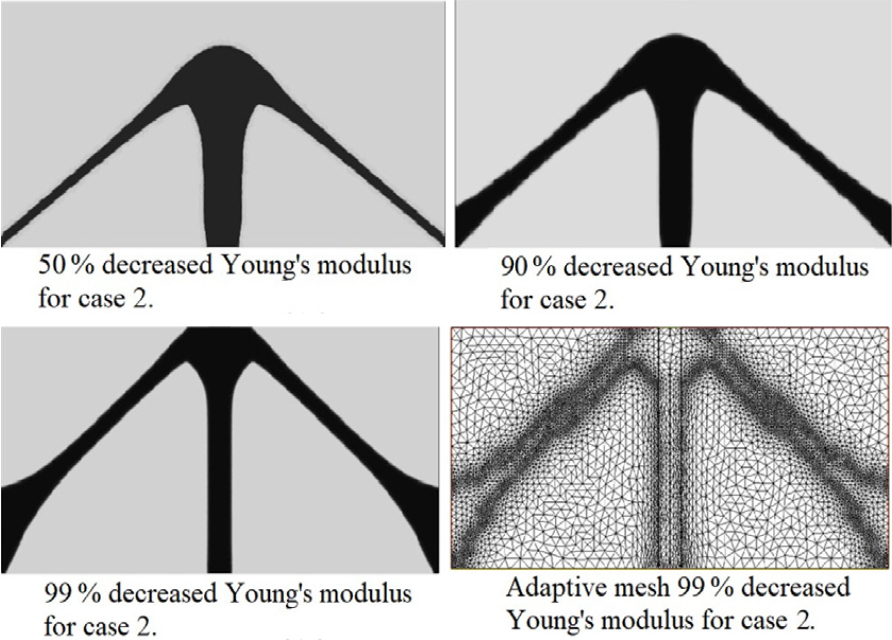
In the result in Fig. 8, the temperature of central area the highest and Young’s modulus become the lowest. The mass in central area become larger and it’s opposite direction from the cases in Fig. 6. Because the Young’s modulus become reduced, thermostatic load become reduced in high temperature area. This trend is shown with similar trend in Fig. 9. It’s shown that the Young’s modulus reduction with temperature become larger, the compliance is also increased in Table 2. Compliance in case 2 is shown in Table 3, and lower compliance results are achieved compared to case 1. When E0 is 0, the difference of thermal load in two cases is shown, and the trend of compliance is also different when the temperature dependent Young’s modulus decreases. It means that static load and thermal load are differently affected in the process of deriving the solution of the two cases.
Table 3.
Compliance and in case 2.
| E0 ratio | 0 | 0.5 | 0.1 | 0.01 |
| Compliance | 0.77 | 1.32 | 5.55 | 68.59 |
| Volume fraction | 0.15 | 0.15 | 0.18 | 0.19 |
From these result. it’s expected the optimized design for metal and polymer components can be different way and the temperature dependent of Young’s modulus must be considered for polymers or such a materials.
In next, the change of temperature with changed volume is considered because the heat dependent Young’s modulus is applied for the optimization. The temperature field is updated as Fig. 3 without coupled mechanical model. Because it’s considered that heat transfer and thermostatic problem are coupled weakly and when the number of iteration is enough, the result will be converged or slightly different with coupled results. It’s modeled that temperature of hottest and lowest area are specified and the distribution of temperature is updated using heat transfer coefficient using changed density. The optimization results of case 1 are presented in Fig. 10.
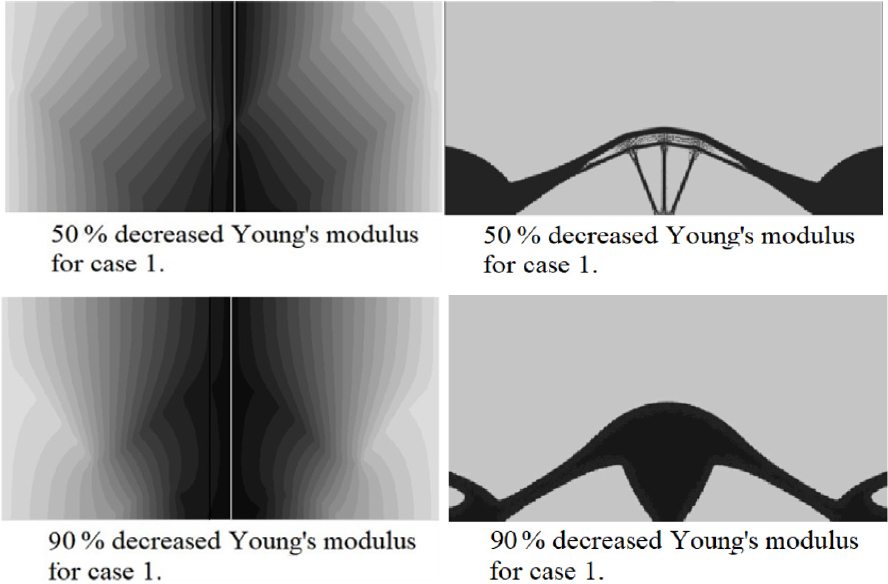
Trend of those results are same as former cases. When the Young’s modulus is decreased, the density become increased in hot area. However, influence of density distribution is smaller than Young’s modulus.
An additional example is introduced to compare the effects on different temperature distribution and the results of the change in the ratio of static and thermal loads with same rectangular model in Figs. 11 and 12. The force is veried from 104 N to 105 N and frequency of 1 Hz and 60 Hz are used for calculation. The function of 90 % decreased Young’s modulus by 15 °C increased temperature is used.
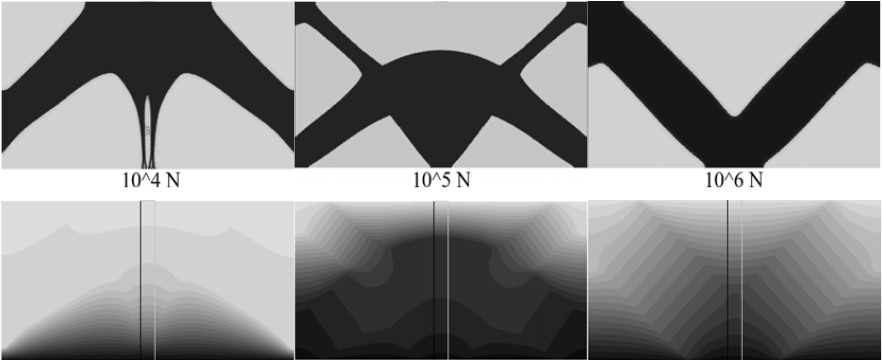
In the case of 104 N, the material is distributed to avoid thermal expansion in Fig. 12. It means thermal loading is larger than mechanical loading. When 106 N is loaded, the result are similar to uniform one because mechanical loading become dominant. The case of 105 N loading is middle of those results.
3.1.2 Dynamic problem
Two model will be shown for this problem. The first case is cantilever beam model which is widely used for dynamic compliance minimization problem in Fig. 13. The material properties are same as thermoelastic example and void faction 0.3 and density 1000.0 (kg/m3) are used for dynamic model.
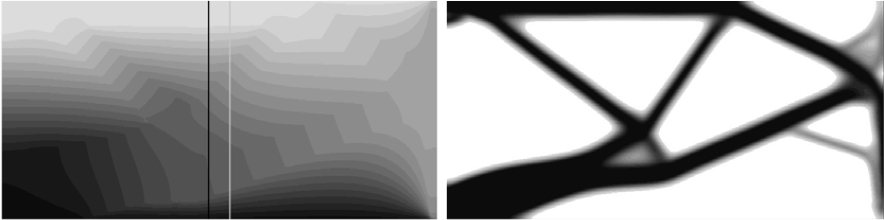
Due to the asymmetric temperature distribution in Fig. 14, a shape biased toward the low temperature is derived when compared with the results in Fig. 15. For the same reason, the thickness of the high temperature part is thicker than that of the low temperature part in Fig. 14.
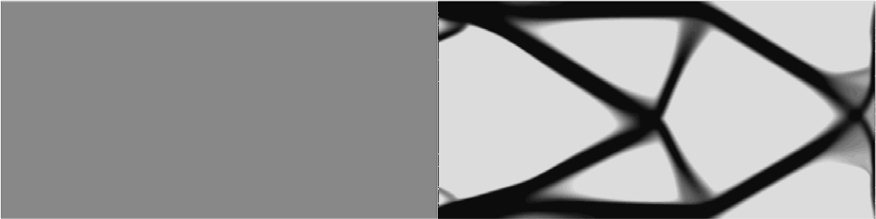
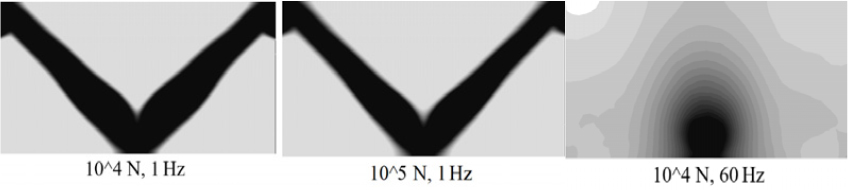
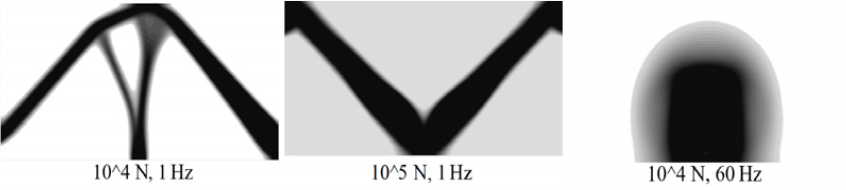
In case of rectangular model in Fig. 4, the first and second natural frequencies are 41.2 Hz and 76.1 Hz. In this example, 1 Hz lower than the first mode and 60 Hz higher than the first mode are used as excitation frequencies. It is generally known that when excitation frequency is lower than the first mode, a solution with an increased natural frequency is derived. When excited on 1 Hz, a stiffer shaped solution is derived, but the first natural frequency of solution is decreased to 13.8 Hz. This is expected to occur because the Young’s modulus of the loaded area is reduced by 90 %. In addition, the result is similar to the solution of thermal problem when excited at 1 Hz and 104 N. However, when the loading is 105 N, the result becomes similar to that of uniform temperature. Since it is a function in the frequency domain for the dynamical problem, it reflects only the Young’s modulus reduction without the static thermal load. Thus, the result is different from the case for thermoelastic problem. When the excitation frequency is 60 Hz, as in the paper of Olhoff and Du[12] the first natural frequency is reduced close to rigid body motion and the result is disconnected from excitation area to the boundary.
As shown in Figs. 16 and 17, the results of calculating the various temperature distributions are derived differently from the thermoelastic problems. Likewise, it is expected that only Young’s modulus is reflected. And, in the case of this dynamic problem, if the number of meshes or modes is not large enough, it is difficult to obtain a symmetrical result from the design of numerical analysis. As the Young’s modulus is affected by the density model and the temperature distribution at the same time, it is expected that the solution is reflected more sensitively than the case of the density model.
3.1.3 Multi-objective problem
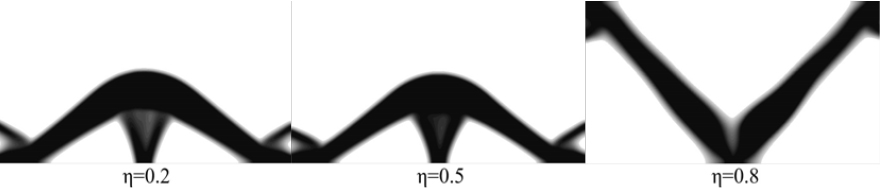
Multi-objective problem with rectangular model in Fig. 4 is performed using same material property of thermoelastic and dynamic problem. Optimization is performed for two heat distribution using 2 excitation frequency. 3 Weighting factors η (0.2, 0.5, 0.8) are used for analysis for each cases.
When the structure is excited at 1 Hz, the optimal solution for each temperature distribution is shown in Figs. 18 and 19. In the case of a solution applying the case B temperature distribution, when the weighting factor approaches 0 or 1, the pattern similar to the thermoelastic or dynamic solution is well seen, respectively. In the case of case A, similar trends using case B are shown. However, in case A, the η corresponding to the equilibrium point is expected to be slightly larger than 0.5. In the case of the current multi objective problem, this trend is observed because the same static and dynamic loading forces are used, but in reality, the static and the dynamic loading cannot be same. In addition, even when actual static and dynamic loads are applied, only one target of performance is serious for design. Therefore, it is necessary for the user to consider the appropriate force loading.
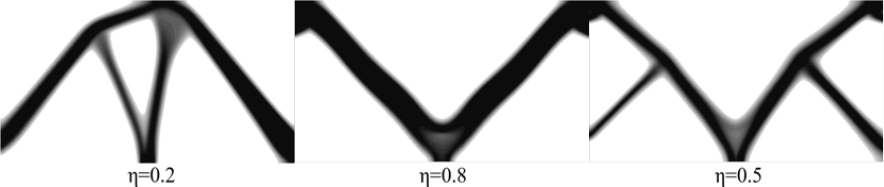
In the case of Figs. 20 and 21, it is the case that the dynamic problem and the thermoelastic problem, from which the unconnected solution is derived, are used as multi objectives. Because of the solution of thermoelastic problem of the connected shape, there is an advantage that the solution of the connected form is obtained. However, there is a limitation in that many gray scale elements are found.
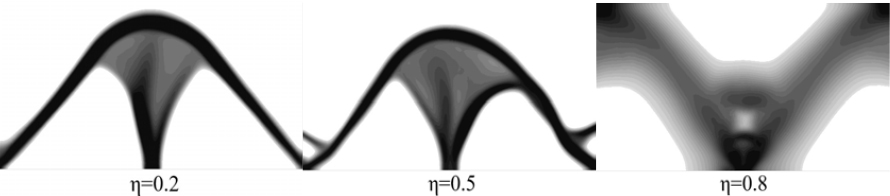
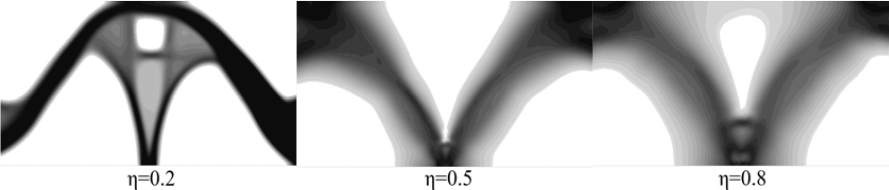
The compliance values are compared in Tables 4 and 5 uisng Case A and different excitation frequencies. When the η (thermal load) is large, compliance is largely reduced after optimization. However, the compliance values of the optimal solutions are similar even in different excitation frequencies. Although similar compliance values are obtained under different excitation frequencies, the underlying mechanism cannot be clearly identified based on the present results alone.
Table 4.
Compliance comparison of 1 Hz excitation on thermal load case A.
| η | 0.2 | 0.5 | 0.8 |
| Compliance initial | 0.255 | 0.637 | 1.020 |
| Compliance after | 0.221 | 0.164 | 0.079 |
Table 5.
Compliance comparison of 60 Hz excitation on thermal load case A.
| η | 0.2 | 0.5 | 0.8 |
| Compliance initial | 0.142 | 0.355 | 1.256 |
| Compliance after | 0.101 | 0.144 | 0.111 |
3.2 A Vane of heat pump model
A vane model to control air stream of heater is chosen as a sample problem. In extremely cold condition, electric heater is often used to fulfill the necessary capacity. When electric heater is used for heating, the inlet air temperature on a vane can be higher than 100 °C and outlet air temperature is around 40 °C to prevent injury by heat. The problem is that shape of vane is generally long and slender, therefore it can be largely deformed in this heating condition. In addition, the material of vane is generally chosen for product appearance design with polymers. Therefore the materials with temperature dependent Young’s modulus are frequently applied for vane.
A long and slender vane model of indoor is shown as Fig. 22. The material properties are defined close to that of Acrylonitrile Butadiene Styrene (ABS). Young’s modulus (E0), Poisson ratio (ν), and heat expansion ratio (α) are 2.0 GPa, 94.5 × 10⁻⁶ /K and 0.3. The loaded force F, target volume fraction and thermal conductivity coefficient are 106 N, 0.2 and 0.0008 W/mK. Heat expansion ratio is much larger than metal but thermal conductivity coefficient is much lower than metal. However, the dimensions, shapes of the vanes and temperature distribution are conveniently chosen for calculation with asymmetric boundary condition. 10 Hz and 170 Hz are used for excitation frequency.
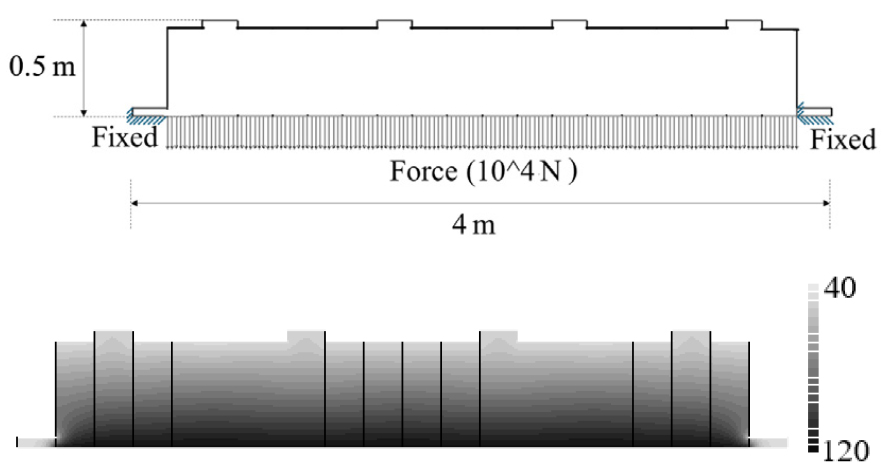
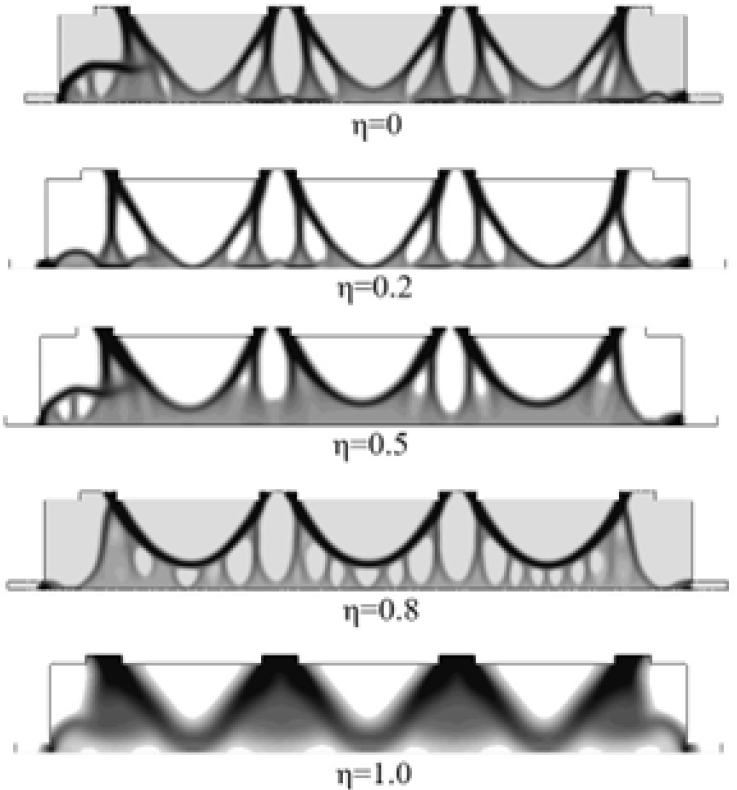
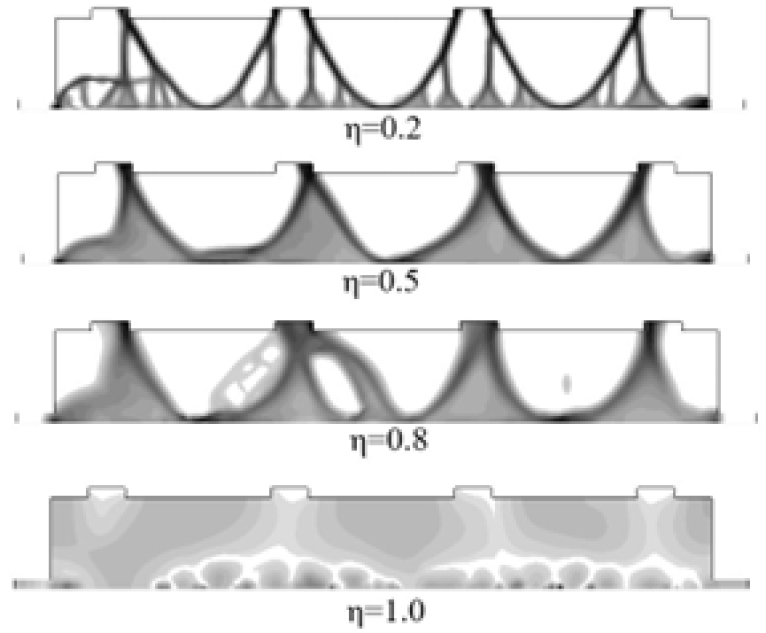
The minimum and maximum temperature of the model are 40 °C and 120 °C. The simplified temperature dependent Young modulus are given as Fig. 23. The optimization results using 2 excitation forces are shown in Figs. 24 and 26. The temperature distributions after calculation are similar to each other, representative of which is shown in Fig. 25. The trend of result is that elements of higher density is used in low temperature area to reduce heat expansion but arch of bridge type structure are generated to reduce harmonic response. In the case of a solution in which only a dynamic problem is considered for complex model, many gray scale elements have been derived, and the mode superposition method is used, so it is very difficult to obtain a solution with a clear boundary due to the lack of modes. However, this example is quite close to real application case. When 10 Hz and 170 Hz are used for excitation and η is small, it looks very reasonable solution to apply component design.

IV. Conclusion
This paper proposed a structural topology optimization method of thermoelastic problem considering temperature dependent Young’s modulus. Simple linear model is suggested and example problem are solved to show the influence of this model. The achievement of this research can be concluded as follows:
(a) A linear temperature dependent Young’s modulus model is suggested considering amorphous thermoplastic polymer.
(b) In the thermoelastic problem, the application of temperature-dependent Young’s modulus model changes the balance of structural and thermal stresses, resulting in a new shape solution.
(c) In the dynamic problem, as the Young’s modulus changed, a solution with a different shape from constant Young’s modulus were derived. The solution in which the excitation point and boundary are not connected according to the relationship between the excitation frequency and the natural frequency is similar to former research.
(d) When multi objective problems are applied, connected solutions can be derived even if the solution of the dynamic compliance minimization problem is not connected from excitation point to the boundary.
(e) Thermoelastic and vibration problems are known to cause frequent gray scale elements. Most of calculation time is used to remove gray scale elements. Adaptive mesh has the advantage of clarifying the boundaries where gray scale elements occur mainly, it’s good to save computational cost.
Therefore, the results of this study are expected to be a good reference for actual design.