The Journal of the Acoustical Society of Korea. 31 May 2013. 247-251
https://doi.org/10.7776/ASK.2013.32.3.247

ABSTRACT


MAIN

  • I. 서 론

  • II. 신호 모델

  • III. 제안 기법

  •   3.1 방위각 추정

  •   3.2 거리 추정

  • IV. 모의 실험

  •   4.1 실험 조건

  •   4.2 실험 결과

  • V. 결 론

I. 서 론

배열 센서를 이용한 음원의 위치 추정은 레이더, 소나, 통신 등 다양한 분야에서 중요한 문제이다.[1-9] 초기 다양한 위치 추정기법들은 대부분 원거리(far field) 음원을 가정하였다. 원거리 음원일 경우 센서에 도달한 음파를 평면파로 가정하여 음원의 위치는 방위각에 의해 결정된다. 그러나 음원이 근거리에 위치하는 경우 음파를 구형파로 모델링해야 되며 음원의 위치 추정은 방위각과 거리 추정이 함께 이루어져야한다.

최근 선형 선배열에서 근거리 위치 추정에 관한 연구가 많이 진행되었다.[3-8] 그중 가장 일반적인 기법으로는 1차원 탐색 기법을 2차원으로 확장한 ML,[3] 2차원 MUSIC[4] 기법이 있으나 연산량이 많이 필요한 단점이 있다. 2차원 탐색을 피하기 위해 선형 예측 기법(linear prediction),[5] higher-order ESPRIT,[6] cumulant 기반[7]등의 기법이 제안되었지만 추가적으로parameter pairing이 필요하거나 고차 통계량을 이용한다. 또 다른 기법으로 대칭 선배열에서 거리와 방위를 분리하여 1차원 탐색으로 위치를 추정하는 기법이 제안되었으나 역시 두 단계의 탐색과정이 필요하다.[8]

 본 논문에서는 근거리 음원의 위치 추정에 필요한 연산량을 줄이기 위해 선형 배열의 대칭성과 MP기법을 이용하여 탐색과정 없이 방위를 추정하는 기법을 제안한다. 거리 추정은 추정된 방위 값을 이용하여 1차원 MUSIC 기법을 이용한다.

II. 신호 모델

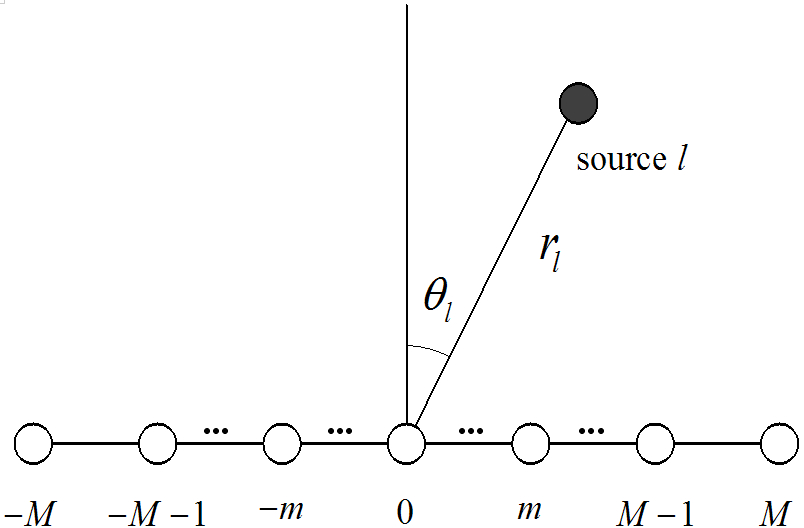
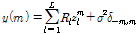
Fig. 1은 가운데 센서를 기준으로 http://static.apub.kr/journalsite/sites/ask/2013-032-03/0660320307/images/PICB155.gif개의 센서로 이루어진 선배열의 기하학적 구조이다. http://static.apub.kr/journalsite/sites/ask/2013-032-03/0660320307/images/PICB165.gif개의 음원이 근거리에서 선형 선배열에 입사 되며 각 센서는 위상의 모호성(ambiguity)이 발생하는 것을 피하기 위해 http://static.apub.kr/journalsite/sites/ask/2013-032-03/0660320307/images/PICB176.gif축을 따라 http://static.apub.kr/journalsite/sites/ask/2013-032-03/0660320307/images/PICB1E4.gif 간격으로 배치되어 있다. 이때 http://static.apub.kr/journalsite/sites/ask/2013-032-03/0660320307/images/PICB1F5.gif는 수신 신호의 파장을 나타낸다. 가운데 센서를 위상의 기준점으로 가정하였을 때 http://static.apub.kr/journalsite/sites/ask/2013-032-03/0660320307/images/PICB215.gif번째 센서에 수신된 신호는 식(1)로 나타난다.

http://static.apub.kr/journalsite/sites/ask/2013-032-03/0660320307/images/PICB2B2.jpg

Fig. 1. Geometry of uniform linear array and source.

http://static.apub.kr/journalsite/sites/ask/2013-032-03/0660320307/images/PICB37E.gif.

(1)

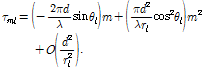
여기서 http://static.apub.kr/journalsite/sites/ask/2013-032-03/0660320307/images/PICB3BD.gifhttp://static.apub.kr/journalsite/sites/ask/2013-032-03/0660320307/images/PICB3CE.gif번째 음원 신호로 센서 간 상호 독립을 가정하며, http://static.apub.kr/journalsite/sites/ask/2013-032-03/0660320307/images/PICB40D.gifhttp://static.apub.kr/journalsite/sites/ask/2013-032-03/0660320307/images/PICB43D.gif번째 센서에서의 백색 잡음신호이다. 그리고 http://static.apub.kr/journalsite/sites/ask/2013-032-03/0660320307/images/PICB44E.gif은 배열의 중심과 http://static.apub.kr/journalsite/sites/ask/2013-032-03/0660320307/images/PICB46E.gif번째 센서사이의 http://static.apub.kr/journalsite/sites/ask/2013-032-03/0660320307/images/PICB49E.gif번째 음원 신호의 시간 지연을 나타내며 식(2)로 나타난다.

http://static.apub.kr/journalsite/sites/ask/2013-032-03/0660320307/images/PICB4FC.gif.

(2)

여기서 http://static.apub.kr/journalsite/sites/ask/2013-032-03/0660320307/images/PICB50D.gifhttp://static.apub.kr/journalsite/sites/ask/2013-032-03/0660320307/images/PICB51D.gif은 각각 http://static.apub.kr/journalsite/sites/ask/2013-032-03/0660320307/images/PICB53E.gif번째 음원의 거리와 방위이다.

표적이 Fresnel 영역에 존재하는 경우 http://static.apub.kr/journalsite/sites/ask/2013-032-03/0660320307/images/PICB54E.gif은 2차 테일러 전개에 의해 다음과 같이 근사적으로 나타낼 수 있다.[8]

http://static.apub.kr/journalsite/sites/ask/2013-032-03/0660320307/images/PICB62A.gif

(3)

여기서 http://static.apub.kr/journalsite/sites/ask/2013-032-03/0660320307/images/PICB679.gifhttp://static.apub.kr/journalsite/sites/ask/2013-032-03/0660320307/images/PICB699.gif보다 크거나 같은 항으로 근사적으로 무시 될 수 있다. 식(3)을 이용하면 식(1)을 식(4)로 표현 할 수 있다.

http://static.apub.kr/journalsite/sites/ask/2013-032-03/0660320307/images/PICB765.gif.

(4)

수신된 신호의 벡터 http://static.apub.kr/journalsite/sites/ask/2013-032-03/0660320307/images/PICB831.gif 는 식(5)로 나타낼 수 있다. http://static.apub.kr/journalsite/sites/ask/2013-032-03/0660320307/images/PICB90C.gif는 전치를 나타낸다.

http://static.apub.kr/journalsite/sites/ask/2013-032-03/0660320307/images/PICB9A9.gif.

(5)

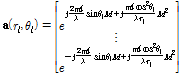
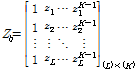
여기서 http://static.apub.kr/journalsite/sites/ask/2013-032-03/0660320307/images/PICBC78.gif는 신호 벡터이며 http://static.apub.kr/journalsite/sites/ask/2013-032-03/0660320307/images/PICBD72.gif 잡음 벡터를 나타낸다. 방향행렬 http://static.apub.kr/journalsite/sites/ask/2013-032-03/0660320307/images/PICBEDA.gif은 식(6)의 조향벡터 http://static.apub.kr/journalsite/sites/ask/2013-032-03/0660320307/images/PICBF58.gif로 구성된다.[8]

http://static.apub.kr/journalsite/sites/ask/2013-032-03/0660320307/images/PICC255.gif.

(6)

III. 제안 기법

3.1 방위각 추정

방위 추정은 선형 선배열에서 기준 센서를 기준으로 신호가 가지는 대칭성을 이용한다. http://static.apub.kr/journalsite/sites/ask/2013-032-03/0660320307/images/PICC2C3.gifhttp://static.apub.kr/journalsite/sites/ask/2013-032-03/0660320307/images/PICC4A8.gif를 정의 하였을 때 http://static.apub.kr/journalsite/sites/ask/2013-032-03/0660320307/images/PICC5F1.gif은 식(7)과 같이 방위 http://static.apub.kr/journalsite/sites/ask/2013-032-03/0660320307/images/PICC630.gif로만 표현되는 성질을 가진다.

http://static.apub.kr/journalsite/sites/ask/2013-032-03/0660320307/images/PICC798.gifhttp://static.apub.kr/journalsite/sites/ask/2013-032-03/0660320307/images/PICC7E7.gif.

(7)

여기서 http://static.apub.kr/journalsite/sites/ask/2013-032-03/0660320307/images/PICC7E8.gifhttp://static.apub.kr/journalsite/sites/ask/2013-032-03/0660320307/images/PICC7F8.gif번째 음원의 파워, http://static.apub.kr/journalsite/sites/ask/2013-032-03/0660320307/images/PICC809.gif은 잡음의 파워, http://static.apub.kr/journalsite/sites/ask/2013-032-03/0660320307/images/PICC8C5.gif을 나타내며 http://static.apub.kr/journalsite/sites/ask/2013-032-03/0660320307/images/PICC8E5.gif는 Dirac 델타 함수다.

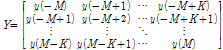
식(7)과 MP기법을 이용하여 방위를 추정하기 위해 다음 식(8)의 http://static.apub.kr/journalsite/sites/ask/2013-032-03/0660320307/images/PICC9E0.gif Hankel 행렬을 정의한다.

http://static.apub.kr/journalsite/sites/ask/2013-032-03/0660320307/images/PICCDD7.gif.

(8)

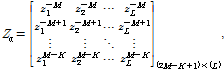
여기서 http://static.apub.kr/journalsite/sites/ask/2013-032-03/0660320307/images/PICCE07.gif는 pencil parameter로 노이즈 필터링을 위해 http://static.apub.kr/journalsite/sites/ask/2013-032-03/0660320307/images/PICCF11.gif의 값을 가져야 효과적이다.[9] 다음과 같이 http://static.apub.kr/journalsite/sites/ask/2013-032-03/0660320307/images/PICCFCD.gif 크기의 부행렬 http://static.apub.kr/journalsite/sites/ask/2013-032-03/0660320307/images/PICCFDE.gif, http://static.apub.kr/journalsite/sites/ask/2013-032-03/0660320307/images/PICCFEE.gif를 정의하면 식(11), 식(12)의 관계를 가진다.

http://static.apub.kr/journalsite/sites/ask/2013-032-03/0660320307/images/PICD30B.gif,

(9)

http://static.apub.kr/journalsite/sites/ask/2013-032-03/0660320307/images/PICD78E.gif,

(10)

http://static.apub.kr/journalsite/sites/ask/2013-032-03/0660320307/images/PICD79F.gif,

(11)

http://static.apub.kr/journalsite/sites/ask/2013-032-03/0660320307/images/PICD7B0.gif,

(12)

http://static.apub.kr/journalsite/sites/ask/2013-032-03/0660320307/images/PICD956.gif

(13)

http://static.apub.kr/journalsite/sites/ask/2013-032-03/0660320307/images/PICDC34.gif,

(14)

http://static.apub.kr/journalsite/sites/ask/2013-032-03/0660320307/images/PICDCA2.gif,

(15)

http://static.apub.kr/journalsite/sites/ask/2013-032-03/0660320307/images/PICDCE2.gif.

(16)

MP기법으로 http://static.apub.kr/journalsite/sites/ask/2013-032-03/0660320307/images/PICDCF2.gif을 구하기 위해 다음 식을 이용한다.

http://static.apub.kr/journalsite/sites/ask/2013-032-03/0660320307/images/PICDD41.gif.

(17)

여기서 http://static.apub.kr/journalsite/sites/ask/2013-032-03/0660320307/images/PICDD61.gifhttp://static.apub.kr/journalsite/sites/ask/2013-032-03/0660320307/images/PICDD72.gif 단위행렬이며 http://static.apub.kr/journalsite/sites/ask/2013-032-03/0660320307/images/PICDDA2.gif의 랭크(rank)가 http://static.apub.kr/journalsite/sites/ask/2013-032-03/0660320307/images/PICDDA3.gif이 되기 위해서는 http://static.apub.kr/journalsite/sites/ask/2013-032-03/0660320307/images/PICDE01.gif의 조건을 만족해야 된다. 식(17)에서 http://static.apub.kr/journalsite/sites/ask/2013-032-03/0660320307/images/PICDE22.gif을 구하는 문제는 행렬쌍 {http://static.apub.kr/journalsite/sites/ask/2013-032-03/0660320307/images/PICDE32.gif}의 고유값을 구하는 문제와 동일하다.[9] 따라서 식의 해는 식(18)의 고유값이 된다.

http://static.apub.kr/journalsite/sites/ask/2013-032-03/0660320307/images/PICDEDF.gif.

(18)

여기서 http://static.apub.kr/journalsite/sites/ask/2013-032-03/0660320307/images/PICDEFF.gif는 Moore-Penrose pseudo inverse로 식(19)로 정의된다.

http://static.apub.kr/journalsite/sites/ask/2013-032-03/0660320307/images/PICDF7D.gif.

(19)

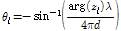
여기서 http://static.apub.kr/journalsite/sites/ask/2013-032-03/0660320307/images/PICDFCC.gif는 conjugate Transpose이다. 음원의 방위각 http://static.apub.kr/journalsite/sites/ask/2013-032-03/0660320307/images/PICDFDC.gif은 추정된 http://static.apub.kr/journalsite/sites/ask/2013-032-03/0660320307/images/PICDFED.gif을 이용하여 식(20)로 주어진다.[9]

http://static.apub.kr/journalsite/sites/ask/2013-032-03/0660320307/images/PICE03C.gif.

(20)

신호에 잡음이 있는 경우 특이값 분해(singular value decomposition)를 통해 잡음으로 인한 효과를 줄일 수 있다. 행렬 http://static.apub.kr/journalsite/sites/ask/2013-032-03/0660320307/images/PICE03D.gifhttp://static.apub.kr/journalsite/sites/ask/2013-032-03/0660320307/images/PICE06D.gif로 분해될 때 http://static.apub.kr/journalsite/sites/ask/2013-032-03/0660320307/images/PICE06E.gifhttp://static.apub.kr/journalsite/sites/ask/2013-032-03/0660320307/images/PICE08E.gif의 특이값을 주대각성분에http://static.apub.kr/journalsite/sites/ask/2013-032-03/0660320307/images/PICE0DD.gif와 같이 내림차순으로 포함한다. 만약 신호에 잡음이 없다면 처음 http://static.apub.kr/journalsite/sites/ask/2013-032-03/0660320307/images/PICE0FD.gif개의 특이값만 0이 아니게 되므로 들어온 신호의 개수를 추정하여 행렬 http://static.apub.kr/journalsite/sites/ask/2013-032-03/0660320307/images/PICE10E.gif를 신호 공간과 잡음 공간으로 분리한 후 신호 공간에서 방위를 추정하게 된다.[9]

3.2 거리 추정

http://static.apub.kr/journalsite/sites/ask/2013-032-03/0660320307/images/PICE11E.gif번째 음원의 거리 http://static.apub.kr/journalsite/sites/ask/2013-032-03/0660320307/images/PICE12F.gif은 추정된 http://static.apub.kr/journalsite/sites/ask/2013-032-03/0660320307/images/PICE14F.gif을 식(6)의 http://static.apub.kr/journalsite/sites/ask/2013-032-03/0660320307/images/PICE18F.gif에 대입하여 2차원 MUSIC 기법 대신 식(21)와 같이 http://static.apub.kr/journalsite/sites/ask/2013-032-03/0660320307/images/PICE190.gif번의 1차원 MUSIC 기법으로 구할 수 있다.

http://static.apub.kr/journalsite/sites/ask/2013-032-03/0660320307/images/PICE25B.gif.

(21)

여기서 http://static.apub.kr/journalsite/sites/ask/2013-032-03/0660320307/images/PICE26C.gif는 수신된 신호의 공분산 행렬 http://static.apub.kr/journalsite/sites/ask/2013-032-03/0660320307/images/PICE357.gif의 고유값 분해(eigenvalue decomposition)를 통해 구해진 잡음 부공간을 나타낸다.[8]

IV. 모의 실험

4.1 실험 조건

제안한 알고리즘의 성능을 비교, 검증하기 위해  대칭 부배열 기법(symmetric subarray)[8]과 함께 모의 실험을 수행하였다. Fig. 1의 구조에서 http://static.apub.kr/journalsite/sites/ask/2013-032-03/0660320307/images/PICE377.gif의 센서를 http://static.apub.kr/journalsite/sites/ask/2013-032-03/0660320307/images/PICE397.gif 간격으로 배치하고 두 개의 비상관(uncorrelated) 신호와 센서간에 상호독립인 복소 가우시안 확률변수로 잡음을 가정하였다. 두 음원은 동일한 파워를 가지고 http://static.apub.kr/journalsite/sites/ask/2013-032-03/0660320307/images/PICE434.gifhttp://static.apub.kr/journalsite/sites/ask/2013-032-03/0660320307/images/PICE4B2.gif에 있다고 가정하였다. 실험은 512개의 표본을 이용하여 SNR이 0 dB에서 20 dB까지 수행되었으며 500회 몬테카를로 실험을 수행하여 식(20)으로 정의한 RMSE 값으로 나타내었다. 탐색 간격 http://static.apub.kr/journalsite/sites/ask/2013-032-03/0660320307/images/PICE511.gif은 각각 (http://static.apub.kr/journalsite/sites/ask/2013-032-03/0660320307/images/PICE550.gif)로 설정하였다.

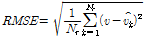
http://static.apub.kr/journalsite/sites/ask/2013-032-03/0660320307/images/PICE64B.gif

(22)

여기서 http://static.apub.kr/journalsite/sites/ask/2013-032-03/0660320307/images/PICE66B.gif은 몬테카를로 실험 횟수, http://static.apub.kr/journalsite/sites/ask/2013-032-03/0660320307/images/PICE69B.gif는 추정하고자 하는 실제 값, http://static.apub.kr/journalsite/sites/ask/2013-032-03/0660320307/images/PICE757.gif은 추정 값을 나타낸다.

4.2 실험 결과

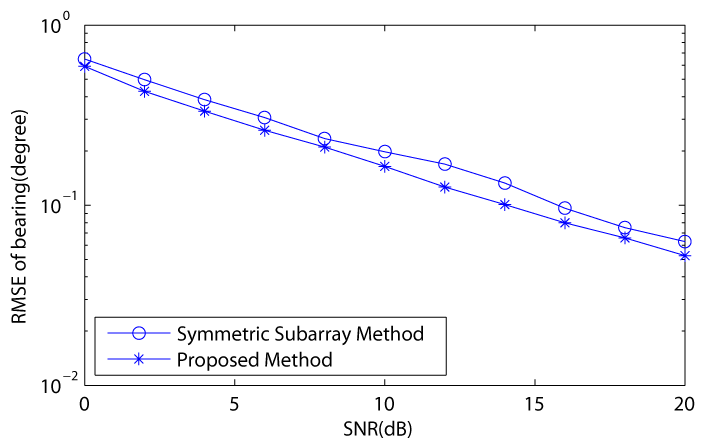
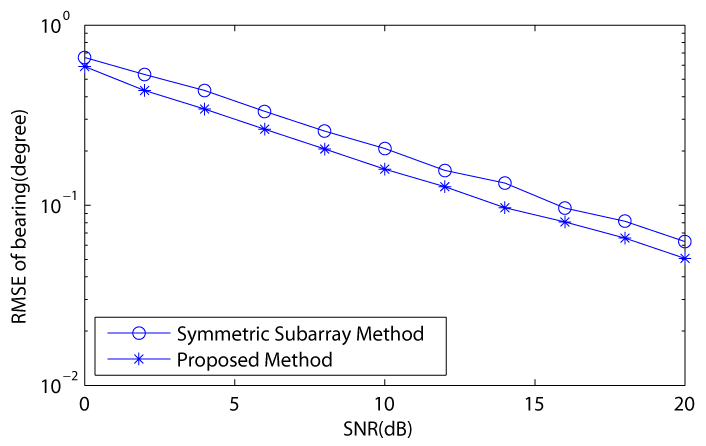
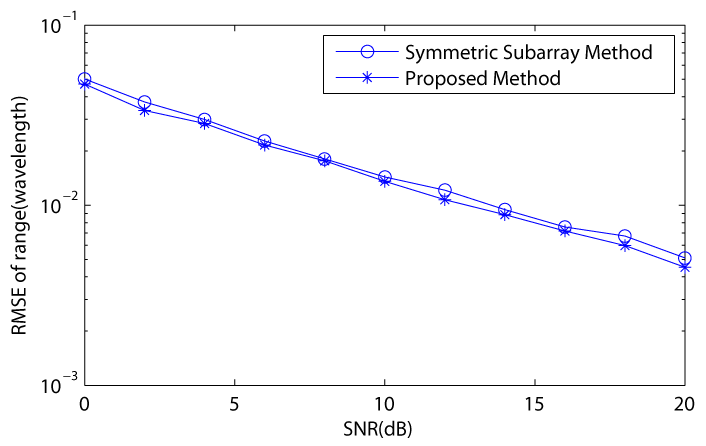
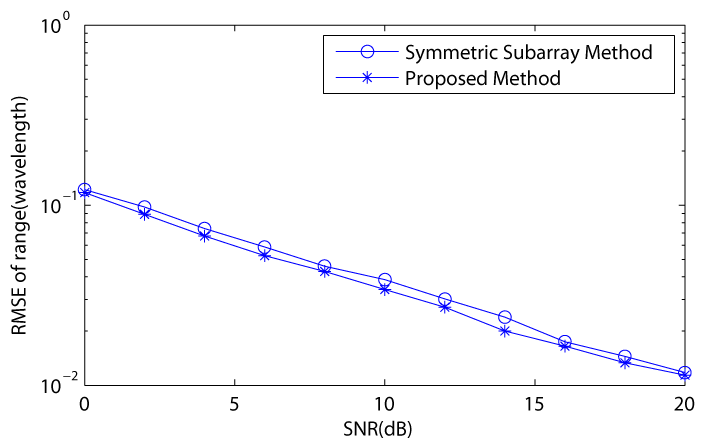
Fig. 2와 Fig. 3은 두 음원의 신호 대 잡음 비에 따른 알고리즘의 위치 추정 성능이다. 실험결과 제안된 알고리즘은 2차원 탐색과정이 필요한 대칭 부배열 기법과 비교하여 다소 우수하거나 유사한 추정성능을 보인다. 연산량 비교를 위해 3.4 GHz 인텔 i7 프로세서에서 MATLAB 프로그램의 ‘tic’, ‘toc’ 명령어로 모의 실험 수행 시간을 측정 하였다. 제안한 알고리즘은 168.62초가 걸린 반면 대칭 부배열 기법을 이용한 기법은 220.55 초가 소요되어 제안한 기법의 연산량 감소 효과를 확인하였다.

http://static.apub.kr/journalsite/sites/ask/2013-032-03/0660320307/images/PICE787.png

(a) first source

http://static.apub.kr/journalsite/sites/ask/2013-032-03/0660320307/images/PICE7B7.png

(b) second source

Fig. 2. RMSE versus SNR of bearing estimation.

http://static.apub.kr/journalsite/sites/ask/2013-032-03/0660320307/images/PICE7E6.png

(a) first source

http://static.apub.kr/journalsite/sites/ask/2013-032-03/0660320307/images/PICE826.png

(b) second source

Fig. 3. RMSE versus SNR of range estimation.

V. 결 론

본 논문에서는 MP기법으로 탐색과정 없이 방위각을 추정하고 거리 추정에 1차원 탐색 과정만을 이용하는 기법을 제안하였다. 선형 선배열에서 근거리 음원이 가지는 특성을 이용하여 원거리 방위 추정 문제와 같이 변화 시킨 후 MP기법을 적용하여 방위를 추정한다. 각 음원의 거리 추정에는 추정된 방위값을 이용한 http://static.apub.kr/journalsite/sites/ask/2013-032-03/0660320307/images/PICE846.gif번의 1차원 MUSIC이 사용된다. 제안된 알고리즘은 기존 기법과 달리 방위 추정에 탐색이 필요 없는 장점이 있다.

Acknowledgements

본 연구는 2012학년도 경북대학교 학술연구비 및 방위사업청과 국방과학연구소의 지원으로 수행되었습니다(계약번호 UD100002KD).

References

1
R. O. Schmit, "Multiple emitter location and signal parameter estimation," IEEE Trans. Antenna and Propagation, 34, 276-280 (1986).
10.1109/TAP.1986.1143830
2
R. Roy and T. Kailath, "ESPRIT-Estimation of signal parameters via rotational invariance techniques," IEEE Trans. Acoustics, Speech and Signal Processing, 37, 984-995 (1989).
10.1109/29.32276
3
J. C. Chen, R. E. Hudon, and Y. Kung, "Maximum likelihood source localization and unknown sensor location estimation for wideband signals in near-field," IEEE Trans. Signal Processing, 50, 1843-1854 (2002).
10.1109/TSP.2002.800420
4
Y. D. Huang and M. Barkat, "Near-field multiple source localization by passive sensor array," IEEE Trans. Antennas and Propagation, 39, 968-975 (1991).
10.1109/8.86917
5
E. Grosicki, K. Abed-Meraim, and Y. Hua, "A weighted linear prediction method for near-field source localization," IEEE Trans. Signal Process., 53, 3651-3660 (2005).
10.1109/TSP.2005.855100
6
N. Yuen and B. Friedlander, "Performance analysis of higher order ESPRIT for localization of near-field sources," IEEE Trans. Signal Process., 46, 709-719 (1998).
10.1109/78.661337
7
H. He, Y. Wang, and J. Saillard, "Passive Localization of Near-field sources using cumulant," IEEE Sensors J., 9, 953-960 (2009).
10.1109/JSEN.2009.2025580
8
W. Zhi and M. Y. W. Chia, "Near-field source localization via symmetric subarrays," IEEE Signal Process. Lett., 14, 409-412 (2007).
10.1109/LSP.2006.888390
9
N. Yilmazer, J. Koh, and T. K. Sarkar, "Utilization of a Unitary Transform for Efficient Computation in the Matrix Pencil Method to Find the Direction of Arrival," IEEE Trans. Antennas and Propagation, 54, 175-181 (2006).
10.1109/TAP.2005.861567
페이지 상단으로 이동하기